Humanity's homeworld has no name in the records of the Frontier. The survivors called it the Cradle, and after a while they stopped speaking of it at all.
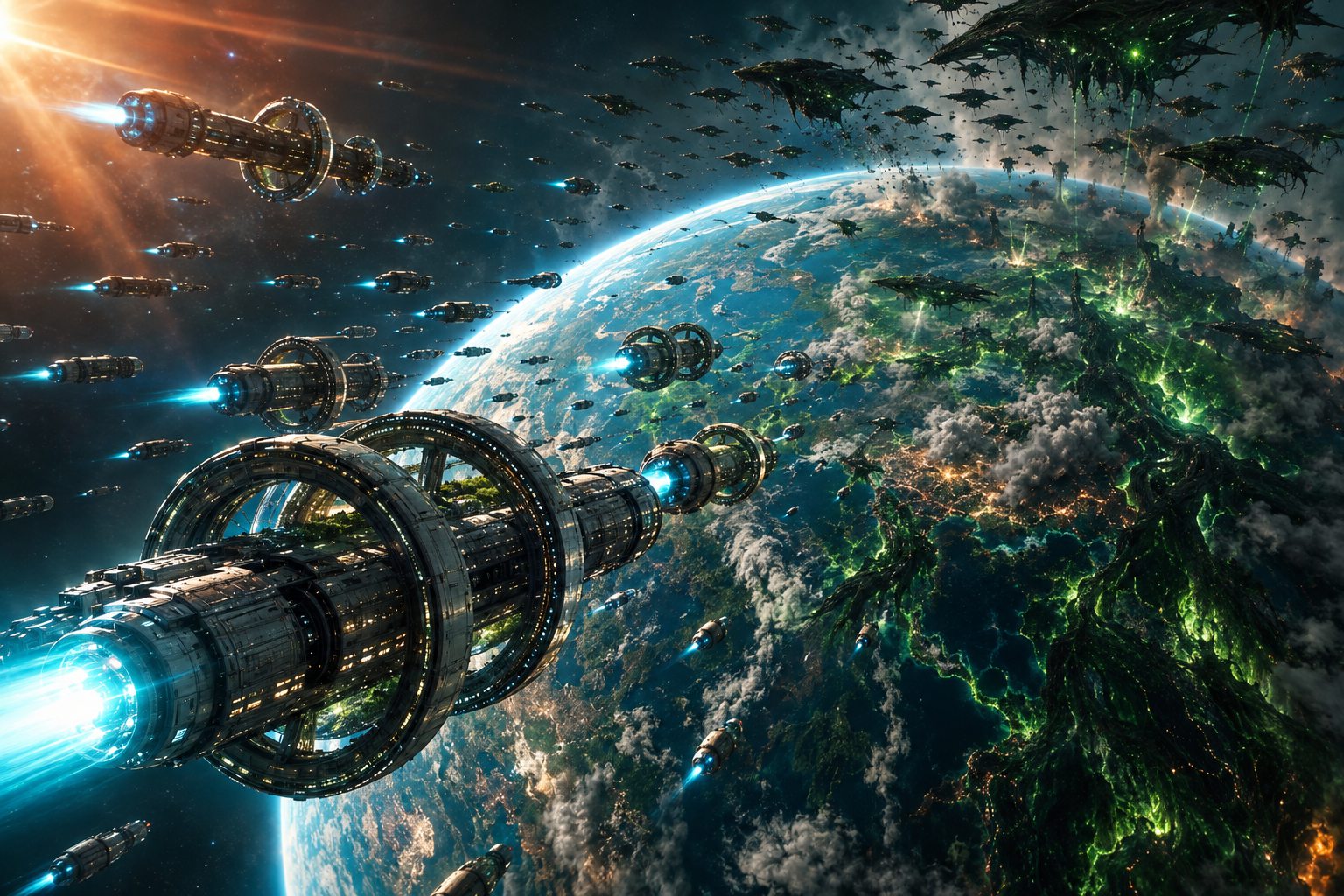
The Cradle had reached the threshold. Its first antimatter drives had pushed survey ships past its outer planets; its first colony arks, vast cylinders built to carry a hundred thousand sleepers each, were fitting out in orbit. The Tide found it that same decade.
The records of those days are fragmentary and all agree on one thing: it was fast. The Harvester swarms fell on the Cradle's orbital yards first, then its continents. The defence forces of a dozen nations fought, and were eaten. By the fortieth day the sky was green with bio-light and the arks were launched half-finished, half-crewed and wholly without a destination.
They scattered. That was the only order anyone gave: scatter, so that it cannot take us all at once. Many arks were never heard from again. The survivors spent a century and a half in the dark between stars, a period the ark-born still call the Long Dark. Generations were born, lived and died aboard without seeing a sky.
Two traditions were born in the Long Dark and survive to this day. The pathfinder crews who flew ahead of the arks, charting the black for a world worth landing on, became the Deep Space Explorers. The ark families who came to believe that stopping is what had killed the Cradle, and that a people who never stops can never be harvested, became the Nomad Clans.
“Scatter, so that it cannot take us all at once.”
— Last general order of the Cradle, as recorded in ark logs